I was quite influenced by a training on Fraud Detection and Prevention recently, where a point came up about "Triggers" losing relevance with time. This was when the Trainer pointed to the underlying principle rather than Trigger in itself. The Triggers changes form, mutates, and forms a new error, yet the essential DNA of the error remained uniform. If we are trained to identify this DNA, the triggers losing relevance would matter no more.
They asked to introspect on this using our own experience and in our own fields of expertise. What I noted down was very stark and surprising. Here are a few triggers, if I may call them, which could have been identified at the time of underwriting a Farm Equipment Proposal.
Pattern 1 - The " Loan Waiver "

Many a time, we would come across customers desirous of purchasing a Farm Equipment, and their records exhibit a pending KCC / Agri Loan.
The rationale given by the customer is that the local village cartel asked him not to pay, so as to avail the loan waiver by the Government. Many of us would be tempted to consider his application for Farm Equipment. This is where we err.
A typical purchaser of Farm Equipment would be a person who services at least 3 - 4 acres apart from other sources of hiring income. The fact that he / she, misrepresents himself / herself to get a loan waiver meant for BPL (Below Poverty Line) or Sub- Marginal farmers, who are far from every dreaming of Farm Equipments is in itself an exhibition of Intent patterns. An honest person would rather be concerned with his credit track record being spoilt due to such exhibition of protest through non-payment.
This is a case where the farmer earns well enough, and yet would like to use a facility provided for the down-trodden, towards making money.
Hence, if your trigger is a Negative Credit Bureau record, there will be a thousand reasons for the same provided. Over a period of time, Negative Credit Bureau would become acceptable for RURAL customers. It is financiers who sow this ideology into the masses. Instead the focus should be on getting the customer to regularize the loan outstanding and NOT provide any loans until track is regularized.
Pattern 2 - Lending "Name"

A pattern seen very often is that a customer would have applied for a loan. The loan would be running in the customer's name, but the asset would be used and enjoyed by somebody else. This is what we call "Proxy" application or "Third Party" Application.
These loans are the biggest threat to collections or repossessions. These are customers who take pride in the fact that they are "Loan Eligible" as compared to many others in their village. They agree to "Lend" their name for purposes of Loan Application. Yet when it comes to repayment - will rationalize that they do not use / enjoy / reap the benefits of the asset, and hence they are not liable.
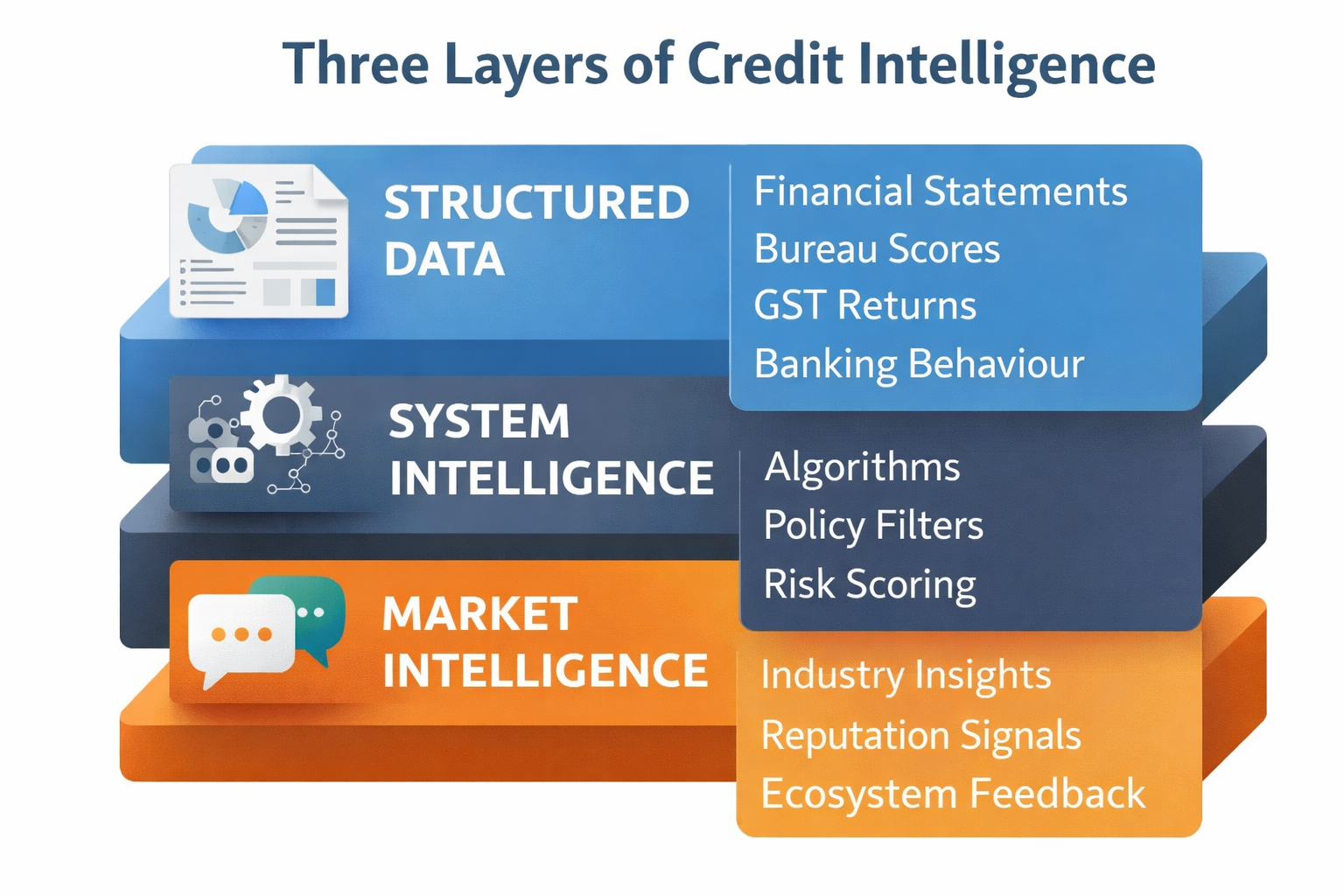
Our triggers typically revolve around Margin Money, Viability Calculations, Credit Bureau Records, Model being taken. Yet the main vein running through is the NEED, and INTENT. What we seek to assess is whether the customer himself has sufficient know-how, whether he needs the asset, and where will he deploy the asset. When the usage is broad and non-specific, it warrants to be seen if there is a problem of "Name" Lending. Any customer - However good he / she is - If found is operating / applying on behalf of another person - We should be alert & clear not to include these customers as part of our portfolio.
Pattern 3 - FOIR / Cash Cover

One of the biggest known farces of viability assessment is this FOIR / Cash Cover. As part of Credit and Policy stands, we tend to formulate or fix a tabulation for our own ease of understanding and systemic inclusion.
The reality is that our own colleagues who are impressed with the customers and their antecedants, are capable of reverse working all numbers into the desired points. Aren't we cheating ourselves ? For those at the grass root levels - NO ! They are complying with a system which is trying to force fit a polymorphic profile of a customer into pre-defined "buckets". These are more like close ended questions rather than open-ended questions.
So if your trigger is say 1.5 Times Cash Cover (OR) 45% FOIR, it is easy to satisfy these requirements for any profile ! So any trigger seen in isolation may be a false picture !
Pattern 4 - Tele Verification

Another blatant issue that exists is in Tele-Verification "Validation of Information" calls. The customer will provide contrary information to what is potrayed in the application. The Tele Caller will soon receive another call from the respective Sales Executive / Branch Executive asking for the questions to be repeated, since the call was actually answered by customer's brother / son / relative, who was not aware of the full facts. Many a time, we would have accepted this.

I quote Ms. Pamela Myers, author of "Lie-spotting" who said "Humans are essentially wired to speak the truth, unless trained otherwise to lie". Hence her theory was that whenever we lie, we leave tell-tale signs behind indicating that a lie is being uttered.
In this case, the customer is trained to speak a lie, with the "carrot" of a Loan hanging in front of him. If the call back is not made immediately, probably the truth will come out yet again. However, out of fear of outcome from a "finger-pointing" exercise ( OR ) "Business Pressures" as we conveniently choose to call it, we agree and call the customer. The responses will be perfect to last T !
We are bothered about a positive TVR. Have you ever asked how many calls it took to complete the TVR, or have you bothered to put in a process whereby the second calling is possible only with prior approval ?
Accountability is critical, especially when TVR has given clear indications of mismatch of information. Our trigger is on the result, whereas it should be focussed on the process of TVR itself.
Pattern 5 - Multiple Income Streams - means STRONG PROFILE

This is a BIG misnomer. Over years, many of us in the Credit Evaluation would have been told that the prospective borrower / loan applicant, is having income from Commercial Vehicles, Shops, Rents from House, Trading Operations, Brick Kiln, and is also a Government Employee - Grade 5.
Many of us would be tempted to consider this profile. Later - (approximately 12 - 18 months later) - we would get to know that the repayment is in arrears, which will progress to NPA. There is a golden rule many of us forget - The first 3/4th period performance of the loan is a metric measure of the strength of the CREDIT ASSESSMENT.
It is a Myth that multiple sources of income is a point of strength. Conversely, it is a alert signal. Many a time, incomes from Farm Equipment will get deployed into other businesses. However, the converse is not true. It is very rare that income from other businesses get deployed in Farm Equipment based business.
Many triggers are typically based on measures such as - agri income to be at least 50% of total income (Or) Captive income to be at least 40 % of total income. Yet the underlying principle is - Who will operate ? How many sources of income does he / she have ? Is the income from business in which Farm Equipment will be deployed constituting a major share ?
---------------------------------------------- X X X ----------------------------------------------
Hence, even as I jotted these as examples, it became clearer to me that whenever we are formulating triggers, we
- Need to know the purpose and essential validating points
- Need to have the total picture sketched in our minds clearly. Metrics alone will never provide a complete picture.
- Need to revamp and amend processes on a continuous basis to ensure health of our validation system.
- Need to ensure that all parties / stakeholders, take up Triggers in spirit rather than a "form filling" exercise. An assessment done well stays till the end of the relationship.
Archive note
This essay was restored from Vivek Krishnan’s LinkedIn archive. Its original wording and available visuals have been preserved.
This page is now the permanent canonical edition within Vivek Perspective.