ORNAMENT Sub Series : Gold Jewellery Business : EPISODE 16 When Meera walked up to the gold-loan counter with her wedding necklace in hand, she wasn’t thinking about LTV or purity. She was thinking: ‘Can I get enough to cover one month’s bills without losing this forever? ’ That small internal question — not the gold price — is what this whole episode is about. How a Banker Sees the Necklace (Cold, technical, recoverability-driven) Net gold weight Purity (22K / 916) Construction risk Melt value LTV eligibility Implied message “This is collateral.”
How a Borrower Feels the Necklace (Warm, emotional, future-oriented) Wedding memory Family approval Fear of loss Hope of redemption “Temporary problem” Implied message “This is identity.” The Loan Decision happens on the Left The emotional burden is carried on the right Before deciding how much loan to take, you must first understand what kind of necklace you own. Banks don’t see jewellery the way jewellers or families do. They see gold recovery risk .
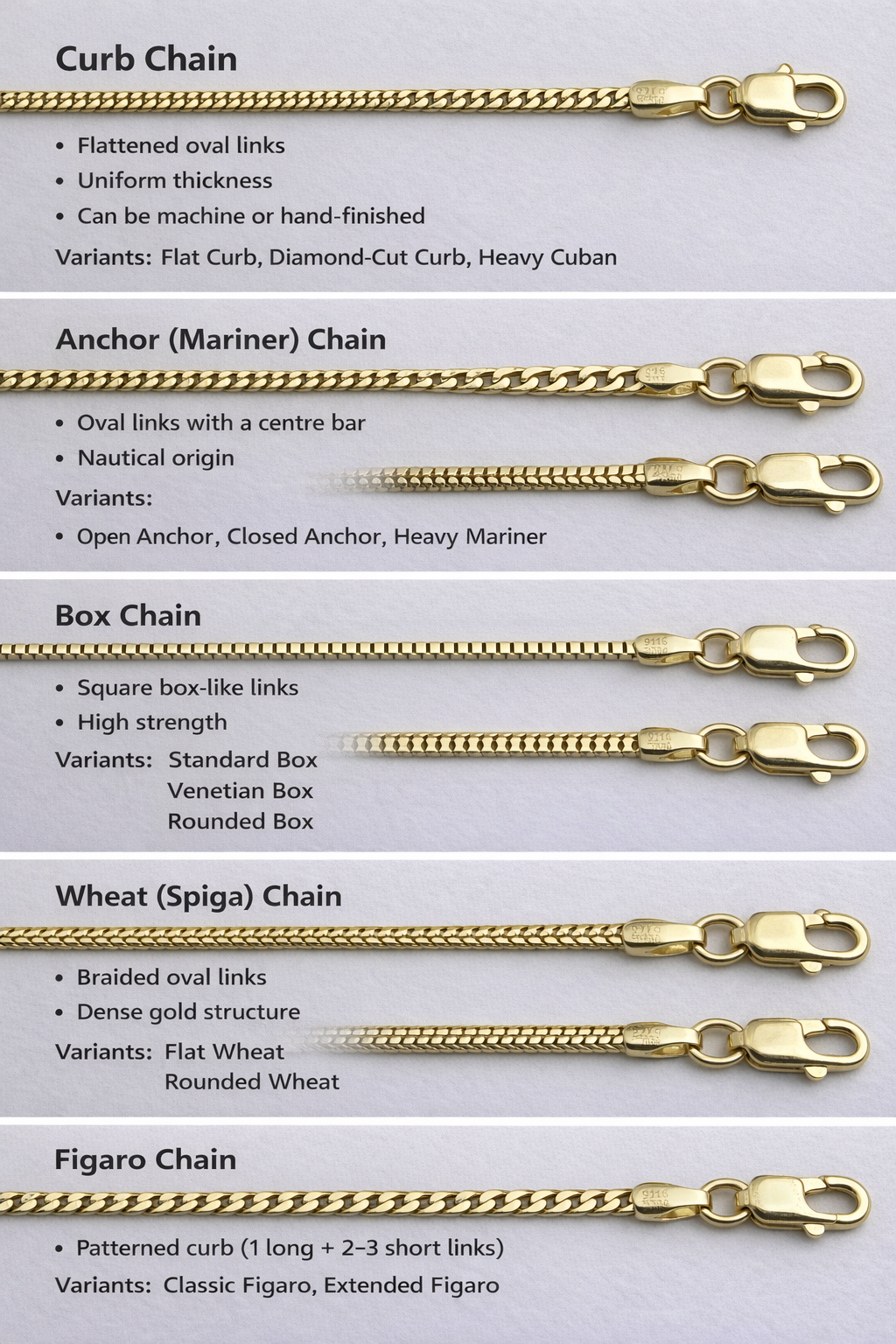
1️⃣ Plain Gold Chains (Highest Comfort Category) What it is Rope chains Box chains Curb / anchor chains Uniform links No stones, no enamel, no hollowing Why bankers like it Pure gold recovery Easy to melt Predictable purity Minimal handling loss Operational reality Closest thing to “raw gold” in jewellery form Likely LTV 👉 70% – 75% (Best-in-class) 2️⃣ Solid Gold Necklaces / Harams (Mango haram, Lakshmi haram, thick temple harams) What it is Heavy, gold-dominant construction Minimal hollow sections Traditional solid craftsmanship Why haircut exists Design premium is ignored Some melting loss assumed Conservative weight deduction Borrower misunderstanding “This is premium jewellery” Bank response: “We lend on gold, not artistry.”
Likely LTV 👉 65% – 70% 3️⃣ Long Haram / Layered Necklaces These are: High gram-weight Often ceremonial Worn infrequently Stored deep in lockers They appeal to borrowers because: a single ornament meets a large loan requirement, fewer items need to be pledged. Borrower behaviour : Chosen for efficiency , not comfort. High redemption intent, but high renewal risk if stress lingers.
Long Haram Very high gram-weight in a single ornament Often layered , sometimes detachable Gold mass is spread across length , not compact May include hollow elements for wearability Other Necklaces (short / solid / ceremonial) Moderate weight per ornament More compact gold concentration Easier to judge solidity Less structural complexity Key difference: A long haram looks heavy because it is long ; a solid necklace looks heavy because it is dense .
Behaviour After Pledge (This is where risk appears) Aspect Long Haram Other Necklaces Initial redemption intent Very high Moderate to high Renewal likelihood High if stress lingers Lower Emotional resistance Appears late Appears early Exit difficulty Increases sharply over time Gradual Stress recognition Delayed Earlier Banker’s View (Silent but decisive) Long Haram Weight meets loan need quickly ✔ Fewer items to handle ✔ But: layered construction mixed solidity melting loss assumptions 👉 Results in slightly lower LTV and higher renewal tracking 4️⃣ Temple / Heirloom Necklaces Often: Older designs Inherited Sentiment-heavy Family-linked (mother, grandmother) These necklaces are: rarely chosen first, often pledged under compulsion, and emotionally loaded far beyond their gold value.
Borrower behaviour : Extreme reluctance to lose. Auction is seen as personal failure, not financial outcome. 5. Mangalsutra-Linked Gold Chains Though technically necklaces, these are: Symbolic Identity-linked Socially sensitive They are usually: not pledged unless unavoidable, or pledged after removing the symbolic elements. Borrower behaviour : High psychological cost, even if gold weight is modest.
Why This Classification Matters to Borrowers At the branch counter, all necklaces are: weighed, purity-tested, and valued identically per gram. But borrowers do not experience them identically . Each type differs in: willingness to pledge, tolerance for renewal, emotional stress during rollover, and pain of non-redemption. When borrowers unknowingly pledge the wrong type of necklace for a given loan need, they don’t feel the impact immediately. They feel it: at the first renewal, at the second extension, when interest piles up, or when family resistance appears.
Now that we understand what kinds of necklaces exist , the next questions become inevitable: Which necklace types are suitable for short-term liquidity ? Which should be reserved only for last-resort borrowing ? Why do some necklace loans renew smoothly while others become emotionally suffocating? What signals does a borrower send — unknowingly — by choosing one type over another? That is where behaviour begins.
Behavioural Summary by Necklace Type (Gold Loan Context) Necklace Type Typical Borrower Trigger Borrower Mindset at Pledge Redemption Intent Renewal Risk Banker’s Silent Reading Plain Gold Chains Short-term liquidity need “This is temporary. I’ll get this back.” Very high Low Early-stage stress, manageable Short / Solid Necklaces Planned expense or mild stress “This is valuable but replaceable.” High Low–moderate Stable borrower, good exit probability Thick / Heavy Chains Efficiency-driven choice “One piece should be enough.”
High Moderate Value concentration begins Long Haram / Layered Necklaces Large loan requirement “Better to pledge one big ornament.” Initially high High if stress persists Stress masked by efficiency Multiple Necklaces Together Escalating financial pressure “Let me solve this fully now.” Mixed High Duration risk emerging Temple / Heirloom Necklaces Compulsion, last options exhausted “I had no other choice.” Emotionally desired but delayed Very high Structural stress confirmed Mangalsutra-Linked Chains Extreme necessity “I hope no one notices.”
Extremely high emotionally Variable Psychological cost exceeds value Loan Requirement vs Jewel Selection Matrix Loan Amount Required Gold Value Needed (₹) Approx. Gold Weight (grams) Jewellery Type Best Suited Why This Works Smoothly ₹50,000 – ₹1,00,000 ₹75,000 – ₹1,50,000 9 – 18 g Plain gold chain / light necklace Easy redemption, minimal emotional cost ₹1,00,000 – ₹2,50,000 ₹1. 5 – ₹3. 75 lakh 18 – 44 g Solid chain / short necklace / bangles Common household jewellery, low resistance ₹2,50,000 – ₹5,00,000 ₹3. 75 – ₹7.
5 lakh 44 – 88 g Thick chain / solid necklace / limited bangles Efficient pledge without emotional escalation ₹5,00,000 – ₹7,50,000 ₹7. 5 – ₹11. 25 lakh 88 – 132 g Long haram / layered necklace Single-ornament efficiency; renewal watch needed ₹7,50,000 – ₹10,00,000 ₹11. 25 – ₹15 lakh 132 – 176 g Long haram + chain / heavy necklace Works, but signals rising financial stress ₹10,00,000 – ₹15,00,000 ₹15 – ₹22. 5 lakh 176 – 265 g Multiple necklaces / bangles set Family involvement, banker scrutiny increases ₹15,00,000 – ₹25,00,000 ₹22. 5 – ₹37.
5 lakh 265 – 440 g Heirloom + ceremonial jewellery High emotional cost, last-resort zone ₹25,00,000+ ₹37.
5 lakh+ 440 g+ Multiple heirloom pieces Structural stress, auction sensitivity Quick Borrower Thumb Rules 🔹 Under ₹5 lakh Stick to chains and simple necklaces Avoid emotionally loaded jewellery Expect smooth redemption 🔹 ₹5–10 lakh Long harams become attractive Watch for renewal dependency Still manageable with discipline 🔹 Above ₹10 lakh Jewellery choice signals structural stress Emotional resistance rises sharply Banker monitoring increases Why This Table Matters (Behavioural Insight) Smaller loans should use replaceable jewellery Bigger loans force value concentration Trouble begins when ornament choice jumps faster than loan need If the loan amount forces you to pledge jewellery you never intended to touch, the loan is already telling you something important.
Summary : Why the Necklace Matters — and Where the Story Moves Next Gold may be valued by weight and purity, but necklaces and chains are chosen by intent . In this episode, we looked at necklaces not as ornaments, but as signals —of urgency, confidence, hesitation, and expectation. We saw how construction determines valuation, how emotion shapes pledging decisions, and how the same piece of gold is experienced very differently by borrowers and bankers.
For borrowers, a necklace is often pledged with the belief that the need is temporary and redemption is certain. For bankers, it is collateral—measured, discounted, and prepared for recovery if required. The gap between these two views is where renewal risk, emotional stress, and prolonged borrowing quietly emerge. Understanding necklaces and chains matters because they are usually the first major step into gold lending . They tell us how a borrower enters the loan—and how they believe the story will end.
In the next episode, we move from entry to continuity . We will examine bangles —the most frequently repeated, partially pledged, and renewed form of gold collateral—and explore how they transform gold loans from one-time solutions into ongoing arrangements. Because in gold lending, necklaces show intent — bangles reveal duration.
Archive note
This essay was restored from Vivek Krishnan’s Wix journal. Its original wording and available visuals have been preserved.
This page is now the permanent canonical edition within Vivek Perspective.