Policy Vs Practice Series
Policy Intent
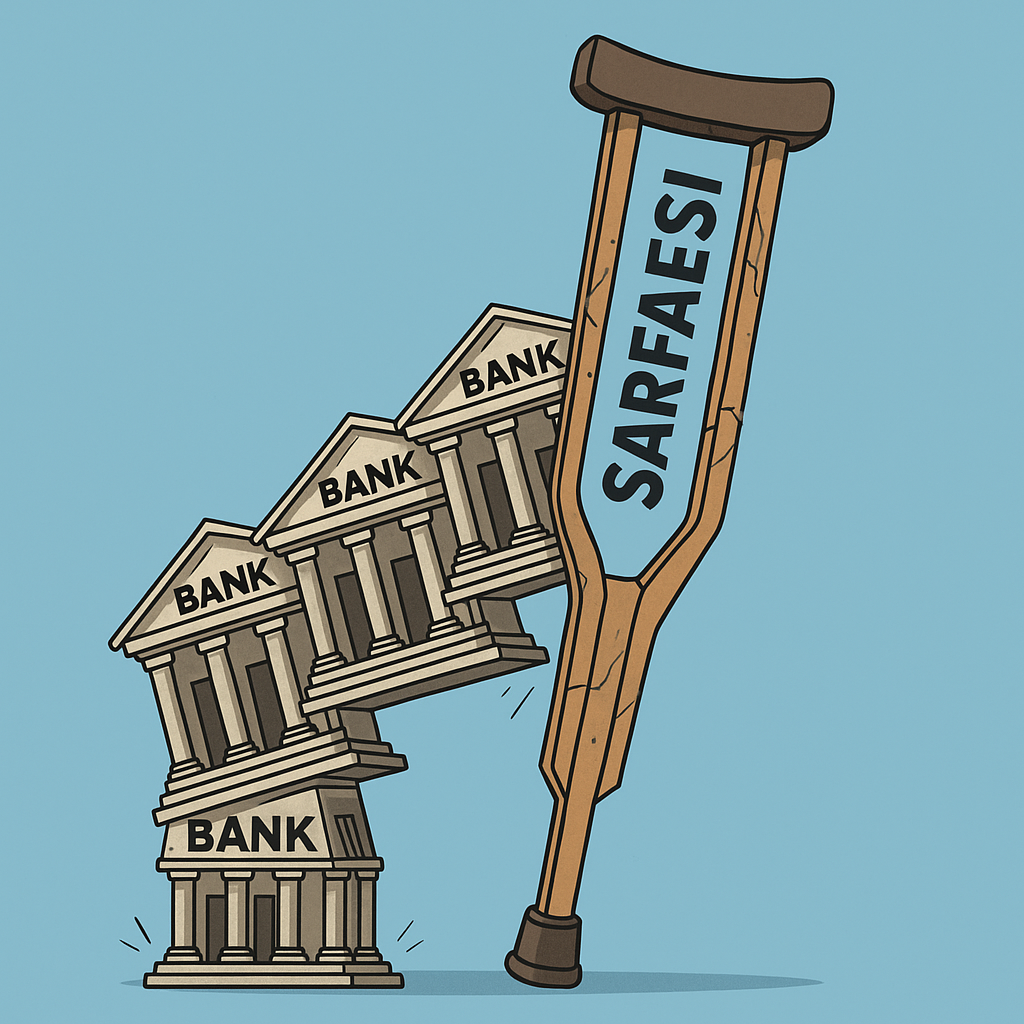
When the SARFAESI Act was introduced in 2002, it was hailed as a game-changer. For the first time, banks in India could enforce security interests without the long wait of civil courts. The intent was clear: empower lenders, cut down resolution time, and improve recovery rates.
Practice Gap
Two decades later, the ground reality looks different:
Delays creep back in — DRT/NCLT clogging, borrower appeals, and collateral possession challenges stretch cases far beyond the “quick” timelines.
Value erosion — Real estate and industrial assets lose value during litigation; recovery rates collapse.
Over-reliance by banks — Instead of strengthening cash flow–based lending or exploring alternate recovery channels, many banks lean excessively on SARFAESI notices as the default recovery tool.
Data speaks — RBI reports show average recovery under SARFAESI hovers around 20–30%, well below expectations.
The “Legal Procyclicality” Problem
This is where SARFAESI begins to look like a legal cousin of procyclicality.
In good times – asset prices are buoyant, so lenders are complacent, believing collateral will cover them.
In bad times – defaults rise, SARFAESI filings flood in, auctions are crowded, and asset prices crash.
Everyone rushes for recovery at once, and the very act of enforcement amplifies distress instead of cushioning it.
Think of it like a fire escape that collapses when too many people try to use it simultaneously.
Case in Point – Real Estate Developers
During the 2008 slowdown and again in 2020, banks scrambled to enforce SARFAESI against developers. What happened?
No bidders came forward for half-finished projects.
Auctions were repeatedly postponed.
By the time sales happened, assets fetched a fraction of their book value.
The policy tool designed for speed ended up synchronizing failures across lenders.
Why This SARFAESI Over-Dependence Matters
Lazy lending practices
Easy collateral enforcement encourages lenders to rely excessively on stock, real estate, and machinery — instead of analysing cash flows, viability, and business models.
Judicial clogging
Though designed to bypass civil courts, SARFAESI now faces its own backlog at DRT/NCLT, creating a second bottleneck.
Systemic fragility
When the majority of lenders depend on the same legal tool, the system has no resilience when that tool slows down.
Moral hazard
Borrowers know they can drag proceedings, bid through proxies, or use legal delays — turning SARFAESI into a ritual, not a resolution.
Reform Directions
If SARFAESI is to fulfil its promise, banks and policymakers must realign:
Shift from collateral to cash flow
Lending must go back to fundamentals: Can the borrower pay? Collateral is a safety net, not the business case.
Time-bound enforcement
Strict caps on stay orders, appeals, and adjournments. Legal certainty is more valuable than legal speed.
Auction reforms
Use transparent, tech-driven, real-time auctions with wider participation to prevent value destruction.
Balance tools
SARFAESI should be one arrow in the quiver, not the only one. Negotiated settlements, restructuring, and market-led workouts should carry equal weight.
Archive note
This essay was restored from Vivek Krishnan’s Wix journal. Its original wording and available visuals have been preserved.
This page is now the permanent canonical edition within Vivek Perspective.