Opening Scene
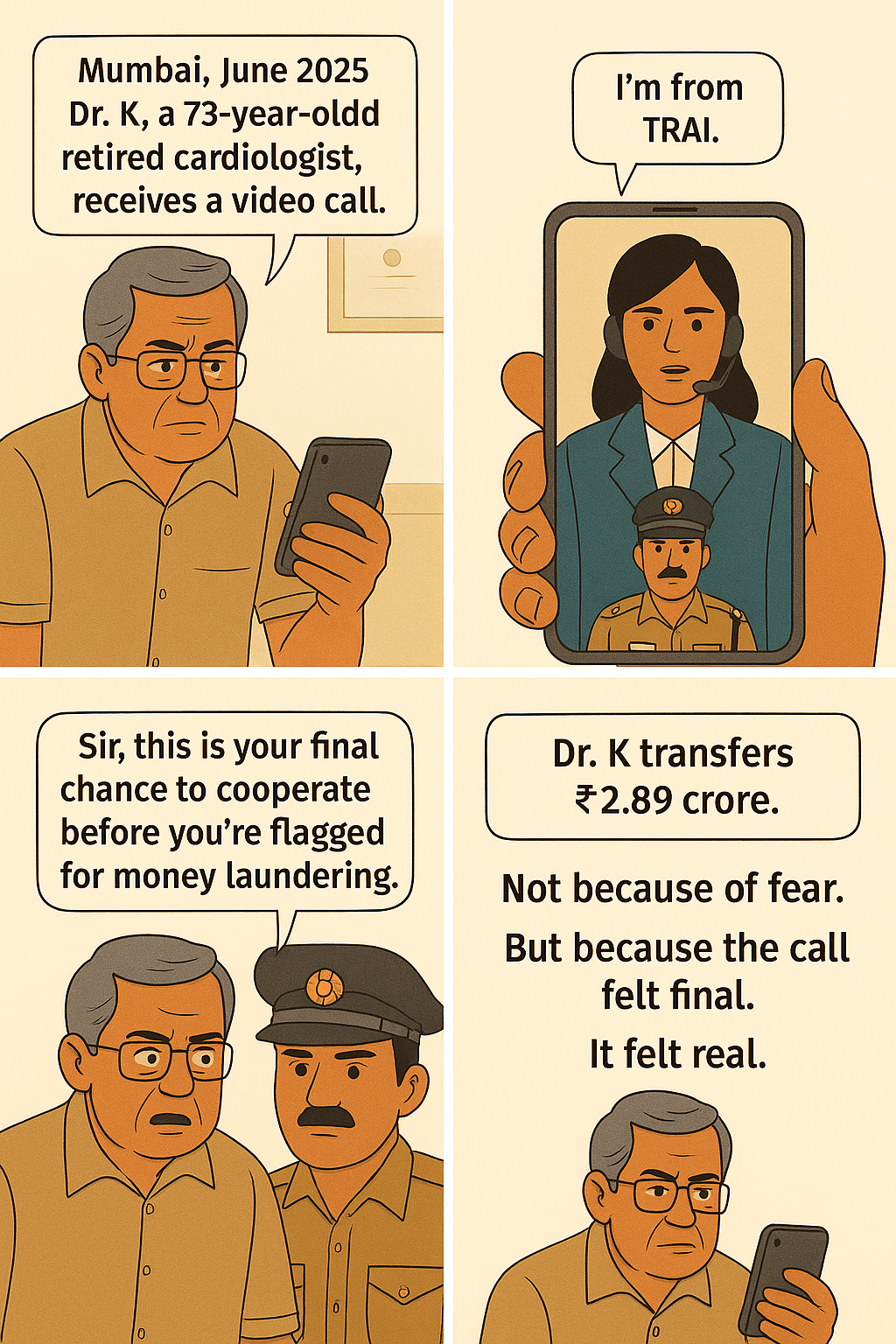
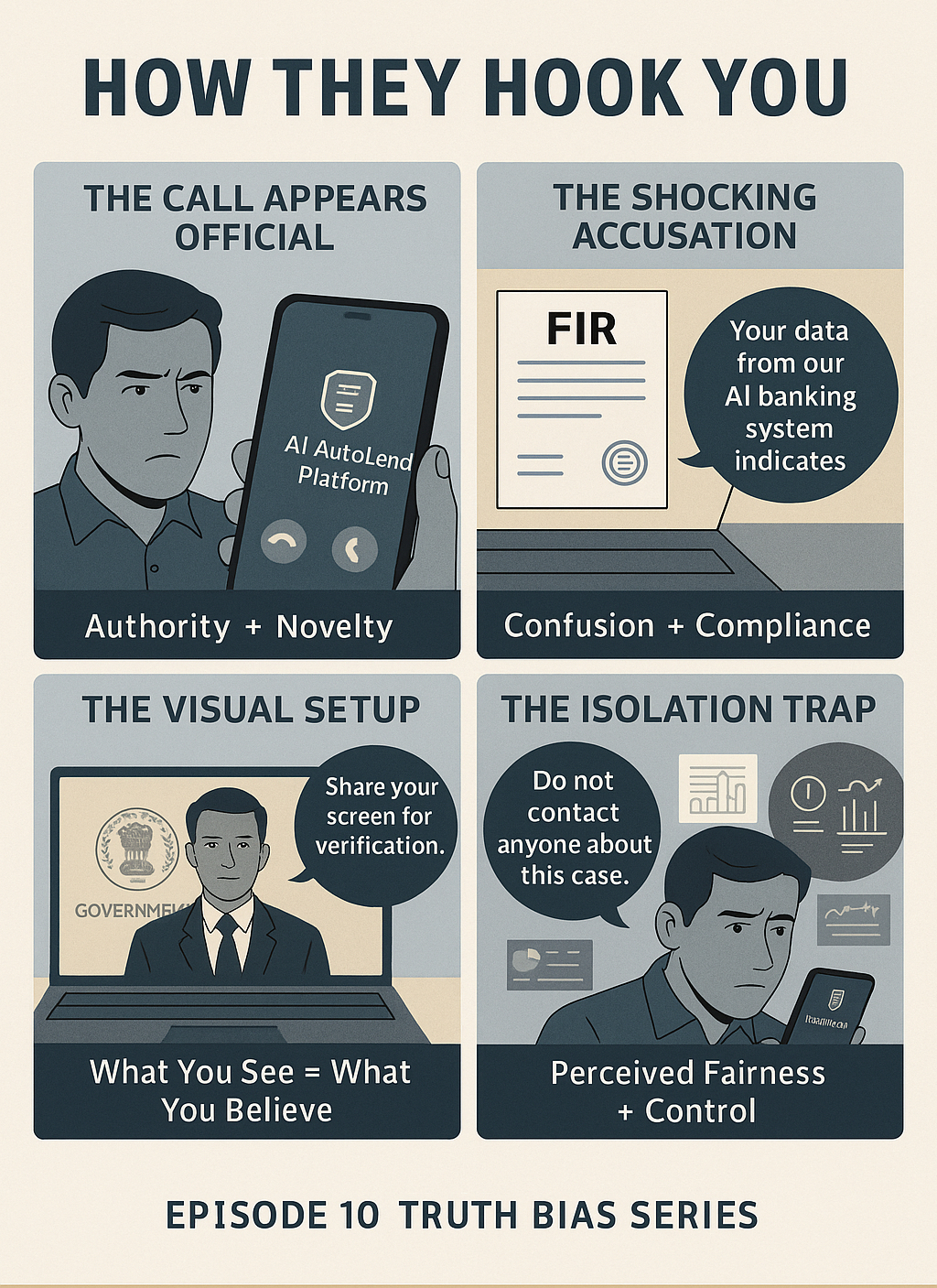
Mumbai, June 2025. Dr. K, a 73-year-old retired cardiologist, receives a video call. A woman, fluent in English, claims to be from TRAI. Moments later, a uniformed officer appears on screen. He shows Dr. K a document with the Mumbai Crime Branch seal.
"Sir, this is your final chance to cooperate before you're flagged for money laundering," he says.
Dr. K transfers ₹2.89 crore.
Not because of fear. But because the call felt final. It felt real.
What Is Digital Arrest?
Digital Arrest is a scam tactic where criminals impersonate officials from the police, CBI, or regulatory bodies over phone/video calls. Victims are falsely accused of crimes like money laundering or Aadhaar misuse. They're told they're "under digital arrest" and must cooperate to avoid public shame or legal action.
No such legal concept exists in Indian law.
But people comply—because it feels official.
The Hook: How They Do It
Spoofed Call: Appears to come from a government agency.
Accusation: Aadhaar, bank account, or SIM linked to a crime.
Performance: Video call with uniformed 'officers', fake documents.
Cooperation Request: "This is your last chance." Transfer funds to "verify innocence."
Each layer adds pressure. Each second delays doubt.
Closure Bias – The Hidden Trap
We aren't wired to live in uncertainty. We crave resolution—even if it's false.
Closure Bias is the tendency to accept a final-sounding statement as true, just to relieve discomfort. When scammers say, "this is your final chance," our brain trades skepticism for peace.
Add uniforms, jargon, video calls, and PDF seals—and it doesn't feel like a scam. It feels like a verdict.
Neuroscience & Psychology Behind Closure Bias
Study/Concept | Key Inference |
Zeigarnik Effect | Humans remember incomplete tasks better; resolution brings mental relief. |
Cognitive Dissonance Theory (Festinger) | Uncertainty creates dissonance; closure reduces psychological discomfort. |
Neuroimaging of Uncertainty (UCL, 2016) | Uncertainty activates pain centers in the brain, similar to physical threat. |
Fast vs. Slow Thinking (Daniel Kahneman) | System 1 (fast, emotional) dominates in high-stress situations like scams. |
Decision Fatigue Studies | Under pressure, people accept closure to conserve mental energy. |
🧠 SIDEBAR: The Zeigarnik Effect
The Zeigarnik Effect, discovered in the 1920s, reveals that humans remember incomplete or unresolved tasks better than completed ones.
Scammers exploit this by presenting a terrifying open loop — an unresolved accusation or legal threat — and then offer a false resolution. Victims comply not necessarily because they believe, but because they want the discomfort to end. The promise of closure soothes the brain more than the facts.
Real Cases
Mumbai Doctor: ₹2.89 crore lost
Kolkata Couple: ₹2.36 crore
Surat Senior: ₹16.65 lakh
Jaipur Retiree: ₹6 lakh cheque to a fake NIA officer
All victims believed because the message was structured, final, and visually convincing.
Law & Crackdown (2024-2025)
MHA Campaign (Nov 2024): Declared "Digital Arrest" a scam; launched mass public awareness.
Court Verdicts: Mumbai sessions court denied bail to digital arrest scam accused, citing gravity of the modus operandi.
Delhi Police & I4C: Blocking spoofed caller IDs and building cybercrime databases.
IT Act & Telecom Guidelines: Enforcing stronger traceability of fraudulent calls under Intermediary Guidelines (2021).
Why It Still Works
Tactic | Effect | Bias Triggered |
Video calls with uniforms | Visual legitimacy | Status Authority Bias |
"Final chance to comply" | Emotional urgency | Closure Bias |
Legal-sounding jargon | Illusion of official process | Truth Bias |
Isolation tactics | No chance to verify | Compliance Pressure |
Closing Thought
We once believed what looked powerful. Now we believe what sounds final.
Digital arrest isn’t real. But Closure Bias is. And in the wrong hands, it costs lives, savings, and peace.
What Should You Do If You Receive a 'Digital Arrest' Call?
✅ Pause: Don’t react immediately. Scammers want urgency to override logic.
✅ Do Not Share Any Personal Information: Government agencies never ask for Aadhaar, PAN, or OTPs over calls.
✅ Hang Up and Verify:
Call 1930 (National Cyber Crime Helpline) or your local police station.
Use official websites to confirm any legal notice.
✅ Report Immediately:
File a report at https://cybercrime.gov.in
Share incident details with your bank to freeze further fraud.
✅ Educate Others:
These scams thrive in silence. Sharing your experience can save someone else.
Remember: No legal agency will ever demand money or use threats over video calls.
Next Episode Preview In Episode 11, we look at another deceptive layer: the illusion of consensus. When everyone around you believes something, do you really have the will to resist?
Archive note
This essay was restored from Vivek Krishnan’s Wix journal. Its original wording and available visuals have been preserved.
This page is now the permanent canonical edition within Vivek Perspective.