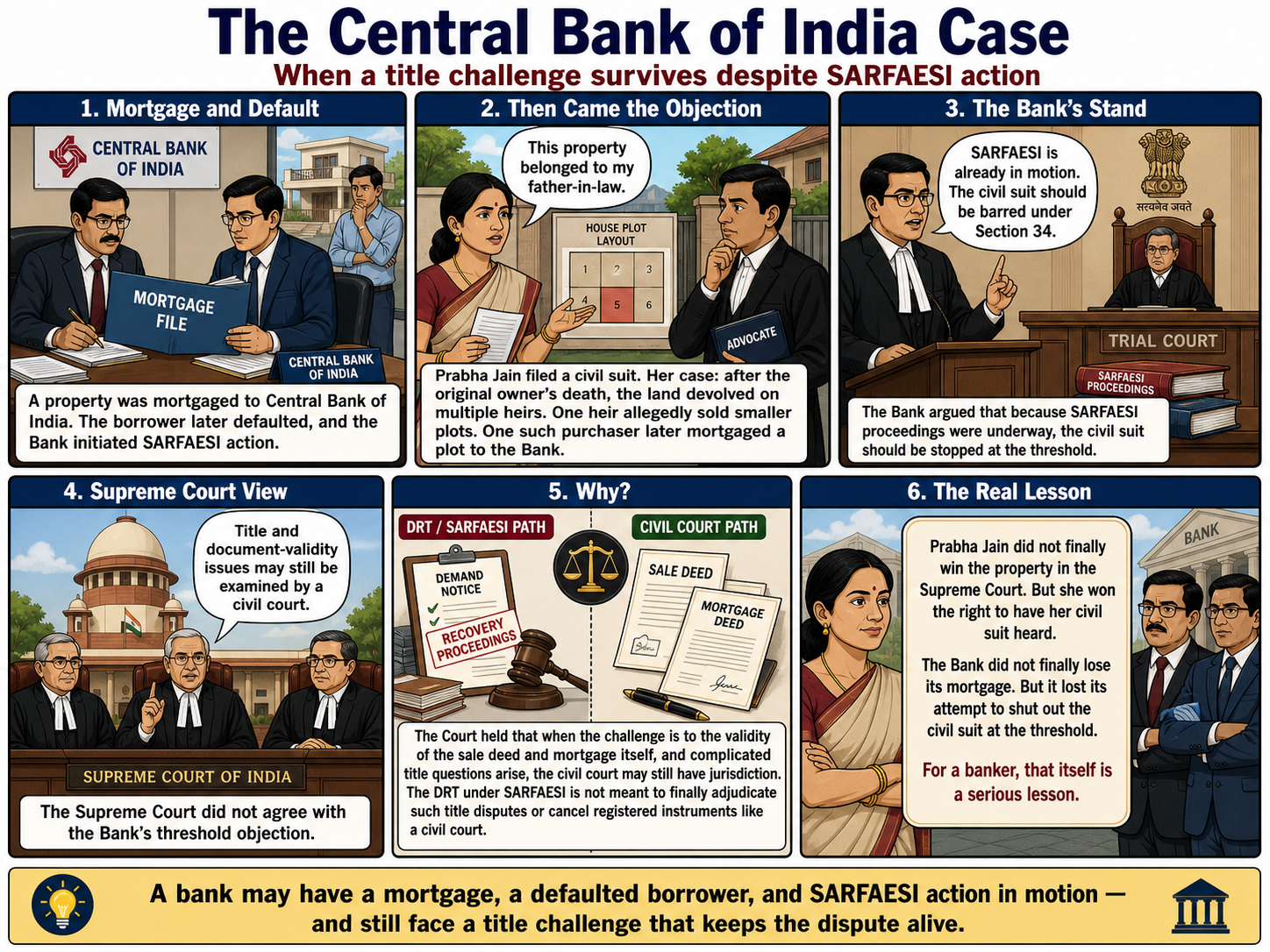
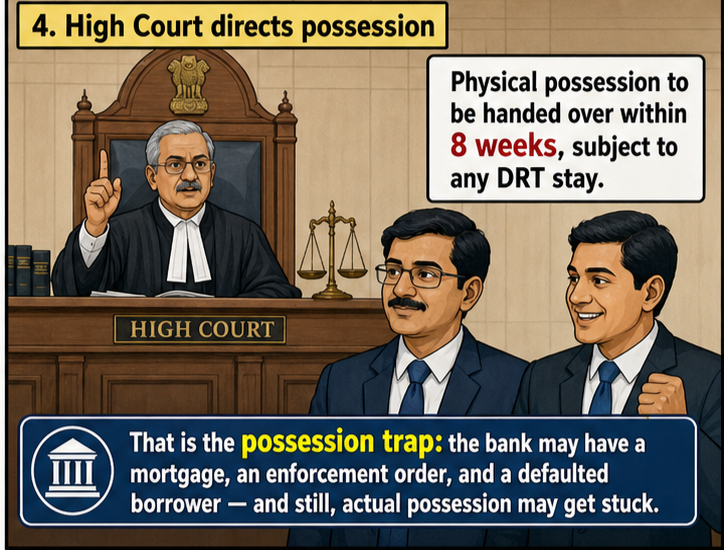
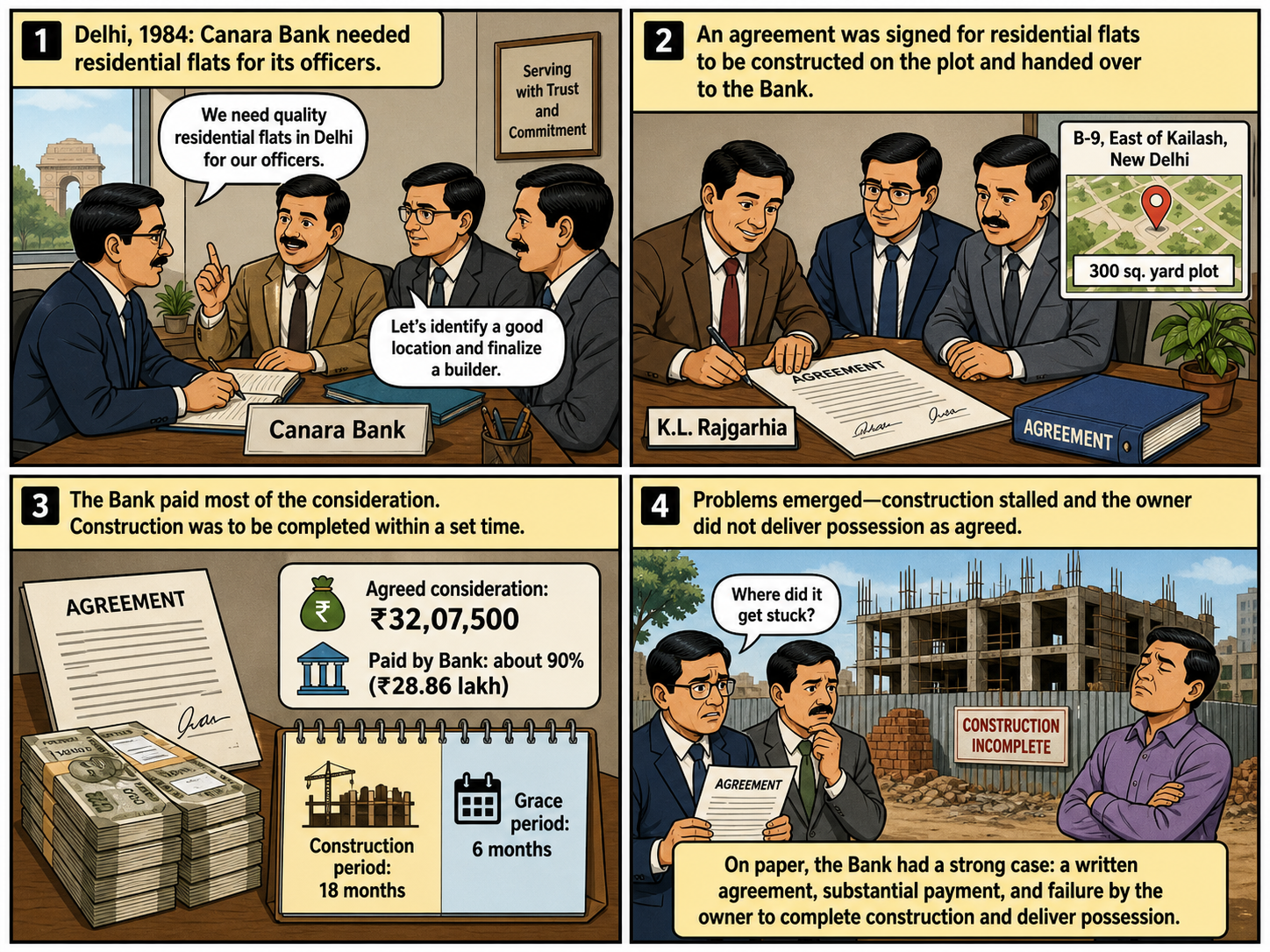
The study of the principle of Truth Bias, has exhibited some very beautiful behavioral patterns, specifically in the Rural Markets.

However, the relevance of this, is in the context of defaults in repayments of loans given by many financiers. Many of them have used various statutes to bring the borrower to justice. My attention goes to one such statute called the INDIAN CONTRACT ACT, where a borrower is classified FRAUD under section 17.
The most important portion of using this statute is in proving INTENT. Malafideness of intent has to be established. The entire process is a time consuming one and painful for the financier or lender. He has lent money, runs the risk of not receiving it back, is accountable to his investors / public, and has also got to act responsibly adhering to the laws of the land and is expected to share negative experiences for common good of brethren.
Yet the thought process trails on patterns. Can we catch the intent perspective early on ? Could the entire situation have been avoided ? Could actions on our side have spurred intent to go bad ? Could we have prevented the transaction from going bad ? – These are questions that would run through every financiers mind.
Here are some paradigms where intent comes to the forefront. Many of these during our regular course of work, would exhibit itself very briefly and may not be available to such detailed dissection. Yet, information that has been gathered from various friends and colleagues are being pooled herein :

Paradigm 1 – Repayment Vs Profitability
As long as the venture for which the funds are borrowed is profitable, there is intent to repay. The probability of positive intent declines with decline in profits. Intention to repay is directly proportional to the profitability of the venture into which borrowed money is deployed. The corollaries to this would be
- A borrowing with a higher interest component stands a higher chance of diversion.
- A loan transaction which derives its essential comfort from underlying collateral rather than the end-use to which funds have been projected, stands higher chance of diversion
- The specific business / activity has to be the focal point. Deriving comfort from group ventures / other businesses and expecting repayments from other businesses to flow into activity for which borrowing is planned is unrealistic. Every business / activity will need to pay for itself. "Cross-Subsidy" happens only in government ventures and never in private ventures.

Paradigm 2 - Projection Vs Industry
Any projection of Turnover / Business has to show congruity to industry / class to which the business belongs. If we project a tractor sale increase of 60% when the industry growth average is hovering around 8% - the picture is moving away from reality.
For a sales team aspiring 60% is acceptable. However, for a financial viability calculation, an 8% can at the best become 12% or 16%, but can never fund a 60%. This applies for every sector.
Higher the deviation away from industry averages, higher is the propensity to default on repayments, which have been based on such deviations. Every incremental point of deviation diminishes the chances of a proper repayment.

Paradigm 3 - Working Cap Vs CapEx / Opex
Any company / venture which deploys borrowed funds to Capital Expenditure / Operational expenditure, have shown a higher propensity to default in repayments.
Let’s take a Tractor Dealer, who takes a Trade Advance for purchase of Tractors, and instead deploys it construction of office for dealership or payments of salaries to staff. Layman Prudence would judge that these be managed from own funds and not from borrowed funds. (Rotation / Replacement of funds not included in this example.)
Let’s say only a portion of the borrowed funds is deployed in operational expenses. Even in such cases, this pattern has shown that it would prevail.
Paradigm 4 - Breaches on account of process simplification
The United Payments Interface (UPI) or the E-Wallet has definitely impacted each of our lives. It has simplified the process of making payments. One could travel with just his mobile and not have the need to carry his wallet. There are further banking systems which have now catered to rural masses on the basis of biometric where signature inconsistencies have been high.
Yet in all of this, if one would notice the check mechanisms are fairly robust. If access to money is simplified without a process or by cutting down steps in order to keep the process simple, such fissure points automatically attract fraudsters. Many would lose money. Faith in the system is lost. Fraudsters are oppurtunists who are tuned to looking out for such process gaps and exploit them to the core.
Reduction in Governance or lack of process has historically shown that the process gap is prone to misuse. One could debate that misuse happens even where processes exists and is being actively governed. Wherever governance exists, the probability of detection and prevention of frauds also co-exists. When there is no process, sequences of activity are out of radar and do not even come with purview of governance.

Paradigm 5 - Credit Bureau Behavioral Patterns
My interactions with many across various financial institutions or banks, have shown a new pattern :
(a) The Credit Bureau Databases have become multiple depending on target segment
(b) Justifications for default in past using future workorders or pending sales deliverables or accrued receivables.
There have been instances where prospective borrowers have known to be defaulting on a loan repayment and yet the credit bureau record does not exhibit the same. While this has to do largely with reporting of the members of the Credit Information Bureau, it also depends on the strata to which our prospective borrowers belong about whom we seek information. Yet, the good part is, every financier now has access to database depending on profile types. So heavy reliance on a single database would keep us, as financiers, ignorant on patterns, but not protect us from its after-effects in terms of defaults in repayments.
It is prudent to follow the guidelines below wherever we come across default patterns :
(a) Any default pattern, irrespective of amount, or borrowing type, observed consecutively for a period exceeding 3 months, is most likely a behavioural pattern that needs to be hedged against. Such patterns observed during the first 6 months of any relationship do not count viz., the first six months of any loan track cannot be considered for this rule.
(b) A credit score between 400 – 600, is a proven habitual defaulter, and is again indicative of the behavioural pattern and the character of the record holder. Closure of loans, correction or temporary repayments used as justifications, are mere baits. The underlying governance of finances of the prospect is still weak.
Exposure on profiles, which have indicated behavioural patterns will eventually tend towards default, since the inability of the prospect to manage finances properly is not assessed correctly.
Traditional businesses, if one would notice, have evaluated employees and how they behave over various scenarios, and assess their family, their habits, and judge the behavioural pattern. Over time, this pattern gives them trust. This trust quotient is used to measure intent in every move of the employee.
This same approach is applicable to relationships with customers. It has to be gradual, and stepped up with time. It should never be the story of the one who got greedy, and killed the goose that lays the golden egg.

The proverbial “Low Hanging Fruit” in the world of finance and banking is fraught with dangers. They are attractive and easy to get. Yet, they come with a price.
With regard to FRAUD as a subject, I personally believe in the 10-80-10 Rule :
- 10 percent of the population will NEVER commit fraud. This is the type of person that will go out of their way to return items to the correct party.
- 80 percent of the population might commit fraud given the right combination of opportunity, pressure, and rationalization.
- 10 percent of the population are actively looking at systems and trying to find a way to commit fraud.
If an entity attracts more of the bottom 10 percent, it is time to have a relook at the internal controls thoroughly. Better to prevent through rigorous controls rather than go behind customers using legal processes. Time is money.
Archive note
This essay was restored from Vivek Krishnan’s LinkedIn archive. Its original wording and available visuals have been preserved.
This page is now the permanent canonical edition within Vivek Perspective.